

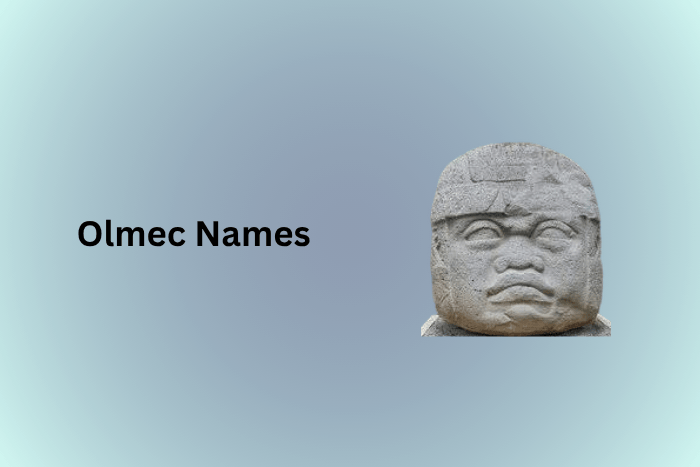
Creating a character inspired by ancient Mesoamerica can be more engaging when the name reflects the historical setting and atmosphere. The Olmec civilization is one of the earliest known complex cultures of Mesoamerica, offering rich inspiration for stories, games, educational projects, and fictional characters. “Olmec Names to Help You Find the Right Name for Your Character” provides distinctive, powerful, and memorable ideas for characters with an ancient theme. Use these Olmec Names to give your character a fitting identity while approaching the culture and its history with respect.
Olmec Names
Olmeca
The modern name used for the ancient culture of Mexico’s Gulf Coast.
San Lorenzo
An important early Olmec center known for large stone monuments.
La Venta
A major Olmec ceremonial center in present-day Tabasco.
Tres Zapotes
An important site connected with the later Olmec period.
Tenochtitlán
A later Mesoamerican place name, useful for showing the wider region’s history.
Tuxtla
A regional name connected with the mountains where Olmec stone was found.
Tabasco
The Mexican state where the important site of La Venta is located.
Veracruz
The Mexican state containing the ancient center of San Lorenzo.
Gulf Coast
The coastal region where the main Olmec centers developed.
Mesoamerica
The larger cultural area that included the Olmec world.
San Lorenzo Tenochtitlán
The full archaeological name commonly used for the San Lorenzo site.
La Merced
An archaeological location associated with Olmec-period offerings.
Laguna de los Cerros
An archaeological site linked with Olmec culture and its surrounding region.
El Manatí
A sacred site known for ancient ritual objects and offerings.
Chalcatzingo
A site with art showing influences connected with Olmec traditions.
Las Bocas
A site where Olmec-style ceramic figures have been found.
Tlatilco
A central Mexican site where Olmec-style ceramic art appeared.
Tlapacoya
A site where Olmec-style artistic influence has been identified.
Motagua
A Guatemalan river valley linked with the movement of jade into the Olmec region.
Tuxtla Mountains
The mountain area that supplied large basalt stones for monuments.
Olmec Civilization
Formative Period
A broad period when early complex societies developed in Mesoamerica.
Early Olmec
A term used for the earlier stage of Olmec cultural development.
Middle Formative
A later part of the Formative era connected with major Olmec activity.
Ceremonial Center
A place built for important public and ritual activities.
Monument Building
A major feature of Olmec society involving large carved stones.
Stone Working
The skilled shaping of basalt, jade, and other hard materials.
Greenstone Trade
The movement of valuable green stones into Olmec centers.
Maize Farming
An important part of the food system in the ancient region.
River Transport
A useful way to move heavy stone and other materials through the landscape.
Social Ranking
A system in which leaders and other groups held different positions.
Rulership
The organization of society around powerful leaders and ceremonial authority.
Regional Trade
The exchange of materials and objects across different areas.
Agricultural Life
Daily life supported by crops and the resources of the land.
Marine Resources
Food and materials obtained from coastal waters and wetlands.
Ritual Life
Ceremonies and practices connected with beliefs and social leadership.
Olmec Horizon
A term used for the wide spread of Olmec-style culture and objects.
Gulf Lowlands
The warm lowland region where important Olmec centers grew.
Monumental Sculpture
Large stone artworks that became a famous part of Olmec culture.
Ceremonial Architecture
Structures and planned spaces made for important public activities.
Cultural Influence
The spread of artistic and social ideas to other Mesoamerican areas.
Olmec People
Gulf Coast Communities
People living in the coastal region where major Olmec centers developed.
Village Farmers
Community members who grew crops and supported local life.
Stone Carvers
Skilled workers who shaped large monuments and smaller sculptures.
Jade Workers
Craftspeople who made ornaments and ritual objects from greenstone.
Potters
Artisans who created ceramic figures and useful vessels.
Traders
People involved in exchanging valuable materials between regions.
Rulers
Important leaders shown in some large Olmec monuments.
Ritual Specialists
People who may have helped organize ceremonies and sacred activities.
Builders
Workers who helped create platforms, pyramids, and ceremonial spaces.
Fisherfolk
Coastal community members who could use the area’s rich water resources.
Farm Families
Households connected with growing crops and producing food.
Craft Workers
People who produced specialized objects for daily or ceremonial use.
Ceramic Artists
Makers of clay figures and other pottery objects.
Monument Makers
Workers connected with the creation of large carved stones.
Greenstone Traders
People associated with the movement of valuable greenstone materials.
Village Leaders
Local figures who could guide smaller communities.
Ceremonial Leaders
People connected with public rituals and important social events.
Hunters
People who obtained food and materials from surrounding wildlife.
Gatherers
Community members who collected useful plants and natural foods.
River Communities
People whose lives benefited from the rivers and wetlands of the region.
Olmec Art
Colossal Head
A huge basalt portrait believed to represent an important ancient person.
Altar
A large carved stone monument connected with ritual imagery.
Throne
A carved stone seat associated with rulers and ceremonial scenes.
Stela
An upright carved stone used to display figures and symbols.
Greenstone Celt
A polished stone object often connected with Olmec symbolic art.
Jade Figure
A small carved figure made from valuable green stone.
Were-Jaguar
A supernatural figure showing a mixture of human and feline features.
Baby Face
A type of ceramic figure named for its infant-like appearance.
Feline Mask
An artistic form showing strong cat-like features.
Eagle Motif
An image connected with powerful bird symbolism.
Serpentine Figure
A sculpture made from green serpentine stone.
Basalt Portrait
A carved portrait made from the dark volcanic stone used for monuments.
Mosaic Pavement
A large patterned surface made from carefully arranged stone pieces.
Greenstone Offering
A ritual deposit containing valuable greenstone objects.
Cloud Throne
A carved seat featuring imagery interpreted as a cloud design.
Maize Symbol
An image connected with corn and agricultural fertility.
Cave Motif
A repeated image representing a cave or opening in the earth.
Feline Claw
A carved form inspired by the claws of large cats.
Headdress
A carved or shown head covering that helps distinguish important figures.
Ritual Figure
An artwork showing a person or supernatural being in a ceremonial setting.
Olmec Religion
Maize God
A supernatural figure connected with corn and plant growth.
Were-Jaguar Spirit
A powerful supernatural image combining human and feline traits.
Cave
A sacred image linked with the earth and supernatural places.
Jaguar
A major animal symbol appearing throughout Olmec imagery.
Eagle
A powerful bird image connected with the sky and rulership.
Serpent
An animal symbol found in the wider religious imagery of ancient Mesoamerica.
Rain
A natural force closely connected with farming and fertility.
Fertility
The idea of growth in crops, animals, and the natural world.
Maize Sprout
A symbol representing new plant growth and agricultural renewal.
Earth
A central natural element connected with farming and caves.
Water Realm
A symbolic world linked with rivers, wetlands, and aquatic animals.
Sky Realm
A symbolic area associated with birds and powers above the earth.
Ancestor
A respected earlier person who could have an important ritual role.
Ritual Offering
An object or group of objects placed for a sacred purpose.
Sacred Hill
A raised natural place that could hold religious importance.
Animal Power
The spiritual strength represented through powerful animals.
Ritual Ballgame
A ceremonial activity that later became important across Mesoamerica.
Cosmos
The larger sacred world connecting earth, sky, water, and supernatural forces.
Ruler Ritual
A ceremony in which leadership and religious authority could come together.
Greenstone Symbolism
The special symbolic value given to greenstone objects in Olmec ritual art.